Explore the geological foundations beneath Bradgate
Geology of Bradgate Park: Self-Guided Tour
Getting to Bradgate Park:
Bus: For up to date information on services in Leicestershire, go to www.choosehowyoumove.co.uk
Car: For this walk, we recommend using the Hunt‘s Hill Car Park (LE6 0AH), though parking is also available at Hallgates (LE7 7HQ) and Newtown Linford (LE6 0HB). Charges apply.
Bike: Bike racks are available at each of the car parks listed above.
For further information, check the Bradgate Park Trust website

Welcome to Bradgate Park
This self-guided geological tour will introduce you to 7 geosites, as we explore more than half a billion years of Earth history within Bradgate Park. The route is approximately 4.1 miles, and with stops at each of the sites is estimated to take around 3-3.5 hours. For each geosite, we have provided the exact location using What3words.
We recommend starting your geological tour of Bradgate Park at the Old John geosite. If you are driving we recommend parking at the Hunt’s Hills Car Park (charges apply, LE6 0AH). Information on other travel options are available on the reverse of this leaflet – simply join the tour at the closest geosite to your entry point.

Old John
What3words: ///enjoy.vision.people
The rocks around Old John Tower, the 18th century folly at the Park’s highest peak, allows you to explore the oldest rocks of Bradgate Park. Take a closer look – you should see layers of siltstone and sandstone, deposited at the bottom of a deep, ancient sea. You might also notice layers where the sediment gets finer as you go upwards, known as graded bedding. This tells us the sediment was deposited by a turbidity current – a kind of deep marine avalanche of mixed up sand, mud, and water.
These are the rocks of the Beacon Hill Formation, and each ‘layer‘ or bed of rock represents the preserved remains of the seabed. These rocks are around 565 million years old.
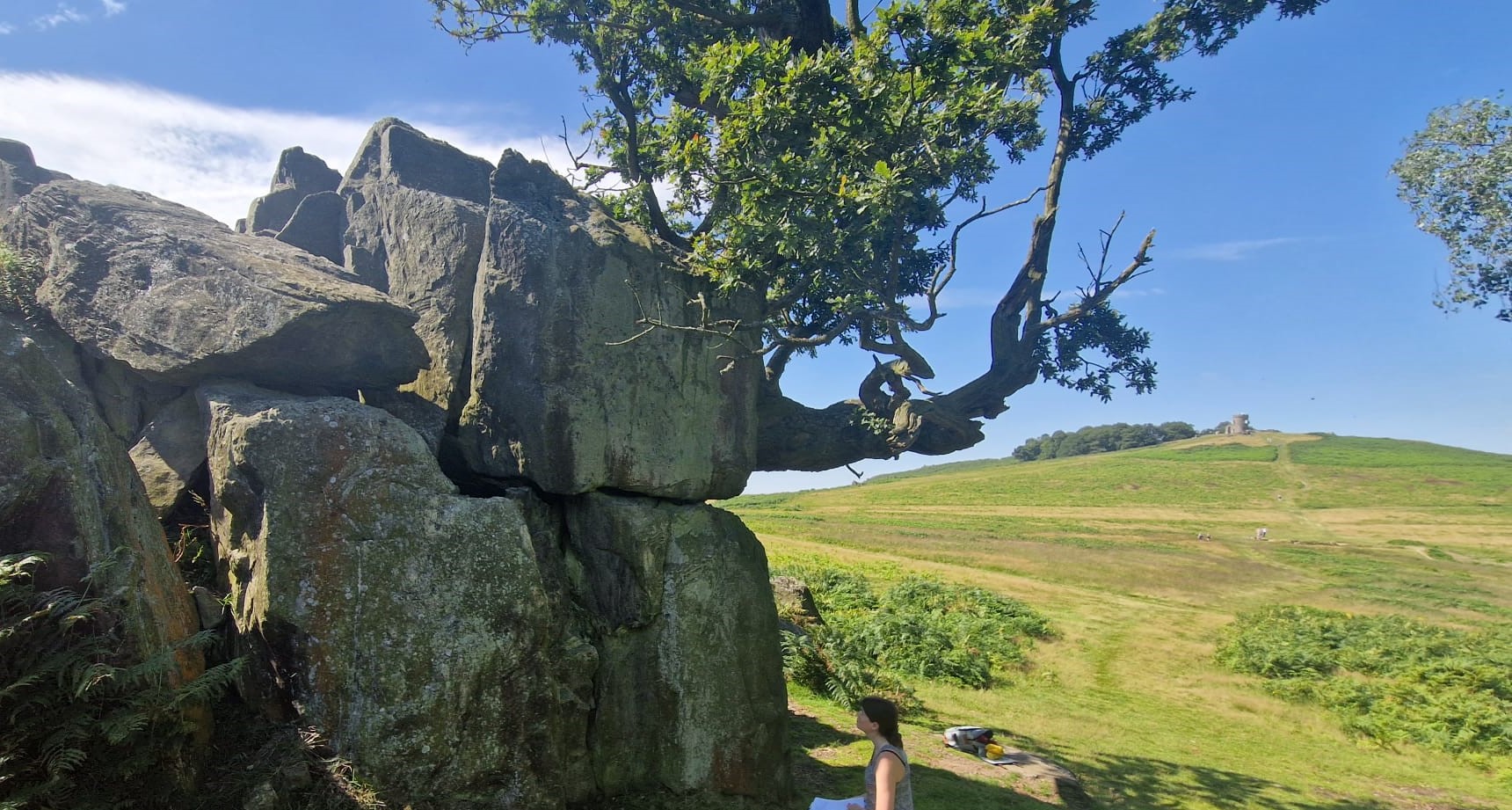
The Swiss Roll
What3words: ///middle.twigs.folds
Next to Sliding Stone Wood you will find a beautiful rocky outcrop with an old oak tree growing out of it. Take a careful look at the northern face of the outcrop and you’ll find something strange. Unlike the rocks at Old John, the layers of sediment here are no longer flat and parallel to each other. Indeed, the beds have been rolled up, giving the site its name, the Swiss Roll!
Soon after being deposited the sediment slipped further down the deep-sea slope, mixing up the layers as it went. Look at how the layers are rolled up – it tells us the sediment had only partially turned to rock when the event happened, and likely had a consistency of plasticine. This type of deposit is called a slump, and this particular unit is called the Sliding Stone Slump Breccia.

Beautiful Bradgatia
What3words: ///spring.unit.estate
Discover Bradgatia linfordensis – a 560 million year old fossil named after Bradgate Park and the nearby village of Newtown Linford. This geosite features interpretation panels, a replica of the fossil, a wooden sculpture of what it might have looked like, and information on how this and other fossils helped Bradgate Park become a National Nature Reserve.

Stable Pit
What3words: ///taken.edits.neat
Near the ruins of Bradgate House turn south off the main path and you will cross a small bridge over the River Lin. Stable Pit is now on your right – named after the stable buildings that used to stand in this area.
Take a close look at the rock. You will see it is made of many small, rounded, sand grains – it is a sandstone. Most of the grains are smooth and round, and they are mostly the same size. This sandstone was deposited in a shallow tidal sea setting in the Cambrian period, around 530 million years ago. Not surprisingly, this rock is called the Stable Pit Member.

Ruins Outcrops
What3words: ///wacky.delay.marble
On the western side of the ruins of Bradgate House you‘ll find a small outcrop of rock. It may look like many of the other rocks you‘ve seen, but take a closer look. Try and find a section that has been polished by people repeatedly stepping on that spot – you will note that the stone is made of crystals – pink, green, and grey.
This is an igneous rock, formed from magma cooling at a shallow depth in the Earth‘s crust around 560 million years ago. It is known to geologists as the South Charnwood Diorite, but is more commonly called Markfieldite, named after the nearby village of Markfield.

Little Matlock
What3words: ///hired.happy.island
The sides of this valley, known as Little Matlock, are made of the rock Markfieldite – just like the Ruins Outcrop. The valley represents a particularly good example of a transverse gorge, where a river cuts through a ridge of hard rock.
In this area of Charnwood Forest, most of the streams flow south, but around the village of Newtown Linford the River Lin takes a sudden turn east. Some researchers have suggested that the modern river is tracing the former route of a river from the Triassic, around 230 million years ago. Others favour the idea that the River Lin is following the route of glacial meltwaters from the last few millions of years. Either way, Little Matlock is an important site for the study of drainage in the English Midlands, and is therefore a protected site.

Bradgatia and Helen Boynton
What3words: ///rush.estate.hoping
Delve deeper into the story of Bradgate Park’s fossil superstar Bradgatia. The onsite interpretation panel will reveal more about the fossil, and the key role that Helen Boynton played in its discovery. This geosite is dedicated to the memory of Helen, who we remember for her longstanding promotion of geological research in Charnwood Forest, and the conservation of our very special fossils.
Conserving Bradgate Park‘s Geology
Bradgate Park is a protected site, not just for its biodiversity, but also because of the amazing geology that is found here. It is an offence to damage, destroy, or remove the geological features within the Park. For conservation reasons, fossil localities are not accessible. Please help us to protect this internationally important geoheritage so that it can be enjoyed by future generations.
National Nature Reserve
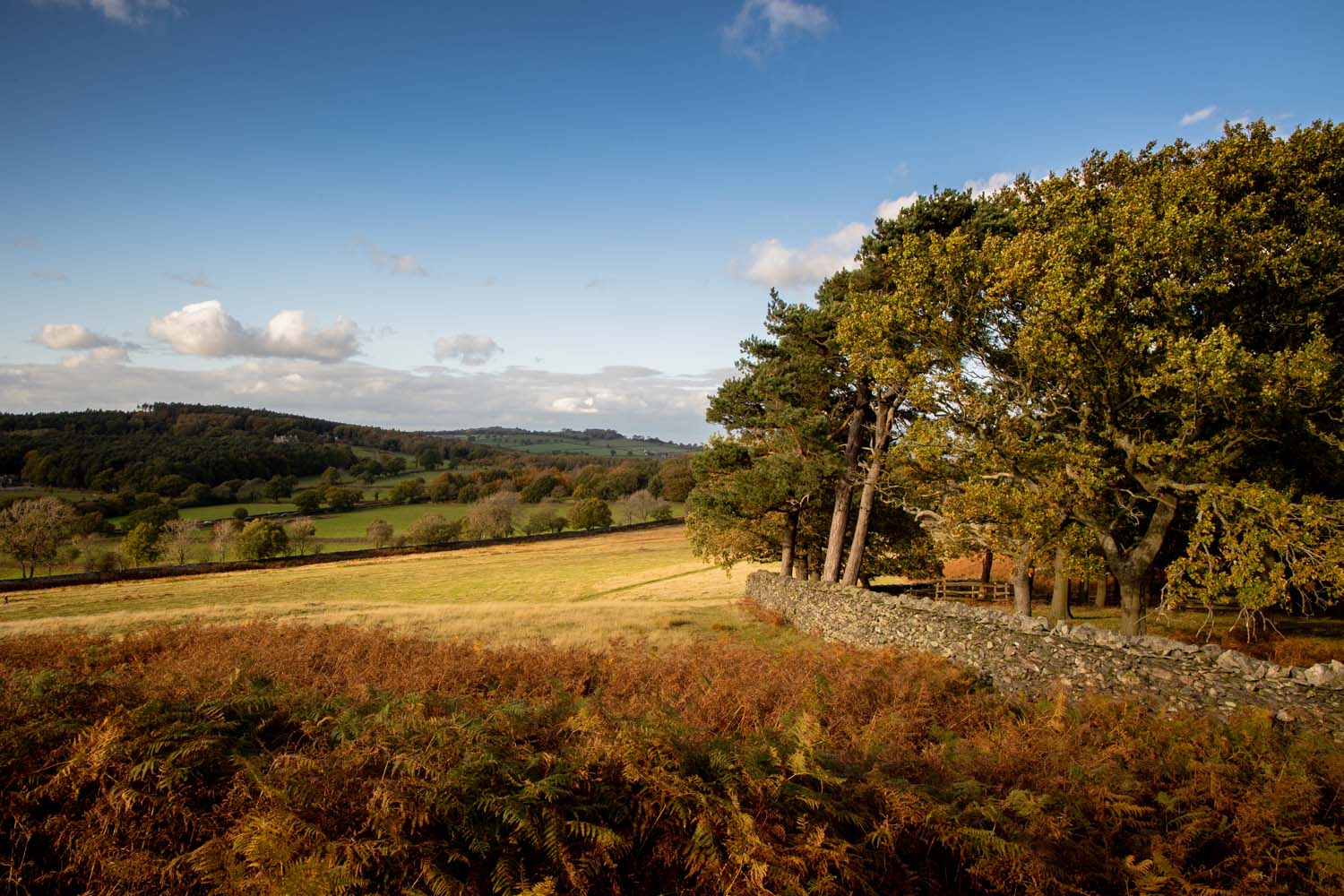
In 2024 Bradgate Park and Swithland Wood was awarded National Nature Reserve (NNR) status by Natural England. This prestigious recognition highlights the exceptional geological and ecological significance of this much-loved parkland and woodland.
National Nature Reserves are the most important places for nature in England, and provide significant benefits for nature conservation, science, and people.
The Bradgate Park and Swithland Wood NNR is conserved and managed by The Bradgate Park Trust, a charity formed in 1928.
Continue Your Journey
Explore more of our geosites and specially curated self-guided tours, and discover more about the rich layers of heritage in Charnwood Forest Geopark
